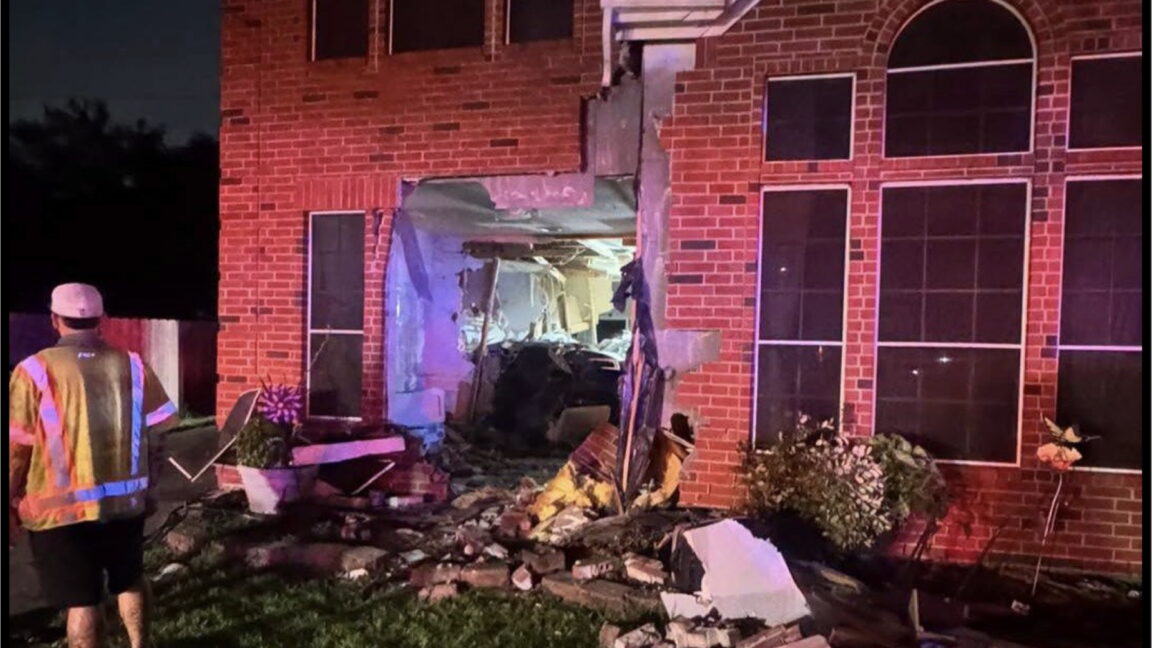
Federal investigators have confirmed that a Tesla driver pressed the accelerator to the floor moments before a fatal crash, contradicting his own story that the vehicle was operating on its own. The National Transportation Safety Board (NTSB) released preliminary findings on Wednesday that back up Tesla and Elon Musk's version of events in a deadly Texas crash.
The crash, which occurred last month in a residential neighborhood, killed a grandmother. The driver, 44-year-old Michael Butler, initially told police that the Full Self-Driving (FSD) feature was engaged at the time of the accident. However, the NTSB's preliminary report reveals that electronic data shows "the driver manually overrode FSD (Supervised) by pressing the accelerator pedal to 100 percent."
Musk's Social Media Pushback
Elon Musk had pushed back on Butler's account on social media, arguing that FSD drives slowly through residential streets and that this was a high-speed crash. Tesla's vice president of AI software, Ashok Elluswamy, later said internal data showed the driver had manually taken over by pressing the accelerator to 100%. The NTSB report now confirms that FSD was engaged but that the driver overrode the system.
"The driver manually overrode FSD (Supervised) by pressing the accelerator pedal to 100 percent." — National Transportation Safety Board preliminary report
DoorDash Delivery at Time of Crash
According to a local ABC News report, Texas police searched Butler's phone with his permission and found he was working as a DoorDash driver at the time. Phone data showed he had made multiple previous delivery stops without issues, but Butler allegedly told police he "passed out" and didn't remember leaving the highway or turning onto the residential streets. The NTSB has not yet assigned a cause for the crash, and the investigation remains ongoing.
The findings underscore the importance of driver attentiveness even when advanced driver-assistance systems are engaged. As Tesla continues to refine its FSD technology, this incident serves as a reminder that the system is not fully autonomous and requires constant driver supervision.