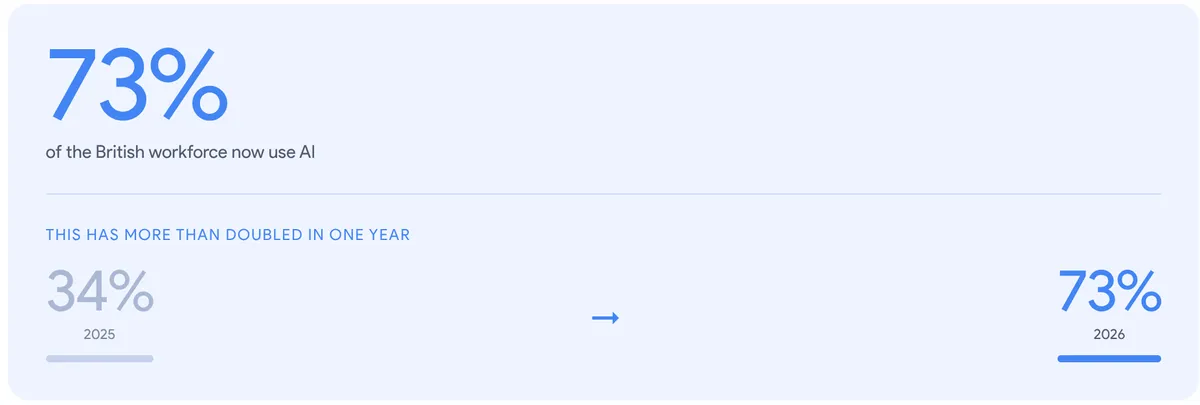
Workplace AI adoption in the UK has doubled over the past year, climbing from 34% to 73%, according to a comprehensive study by Google and Public First. But the surge masks a stark divide: only 15% of workers — dubbed 'AI Trailblazers' — are seeing major career benefits like promotions, pay rises, and faster progression.
Four stages of AI adoption
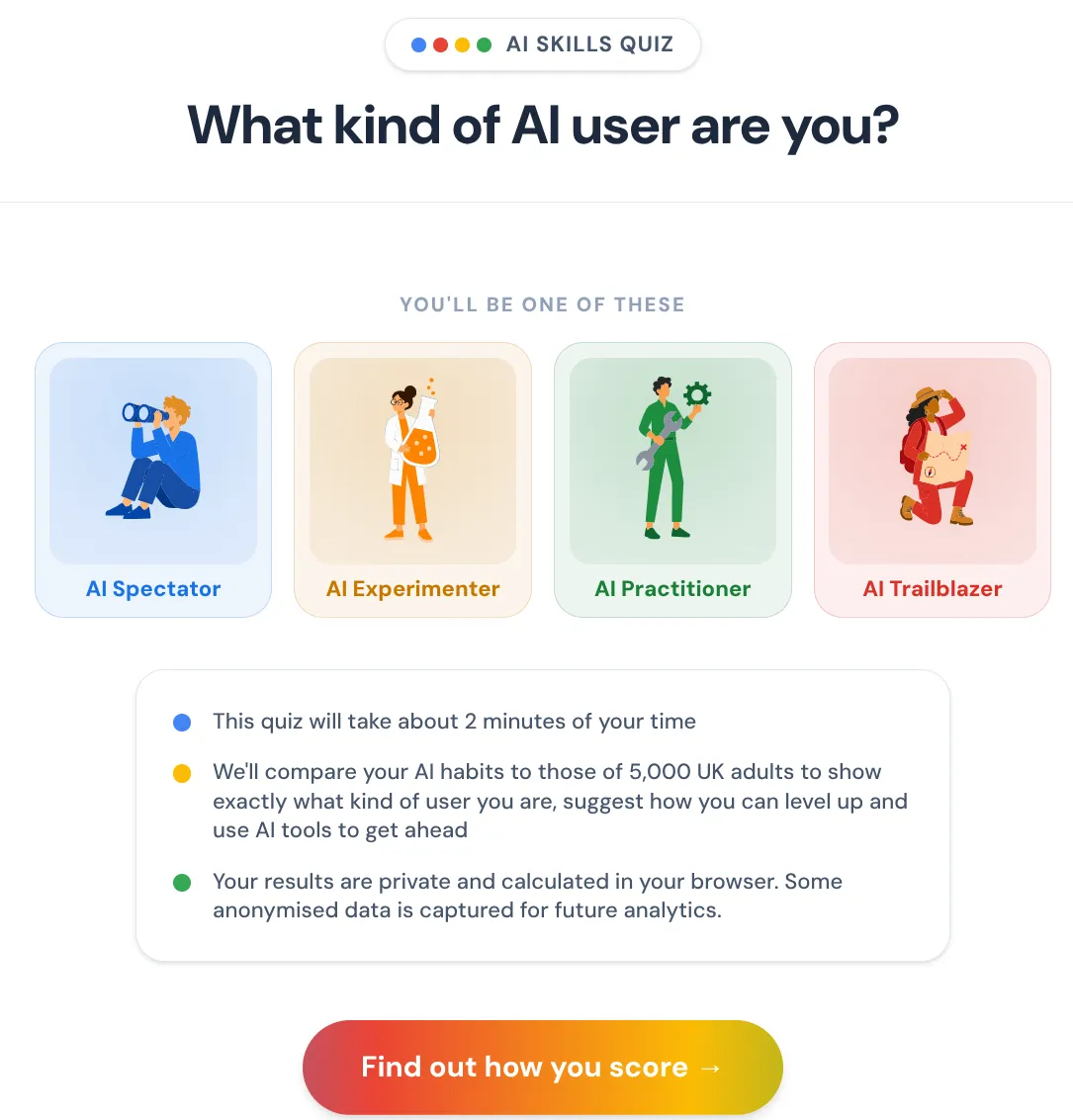
The research segments the workforce into four progressive stages of AI use:
- 'AI Spectators' (10%) — Not yet experimenting with AI.
- 'AI Experimenters' (38%) — Beginners testing simple tasks.
- 'AI Practitioners' (37%) — Intermediates using AI as a daily tool.
- 'AI Trailblazers' (15%) — Advanced users pushing boundaries.
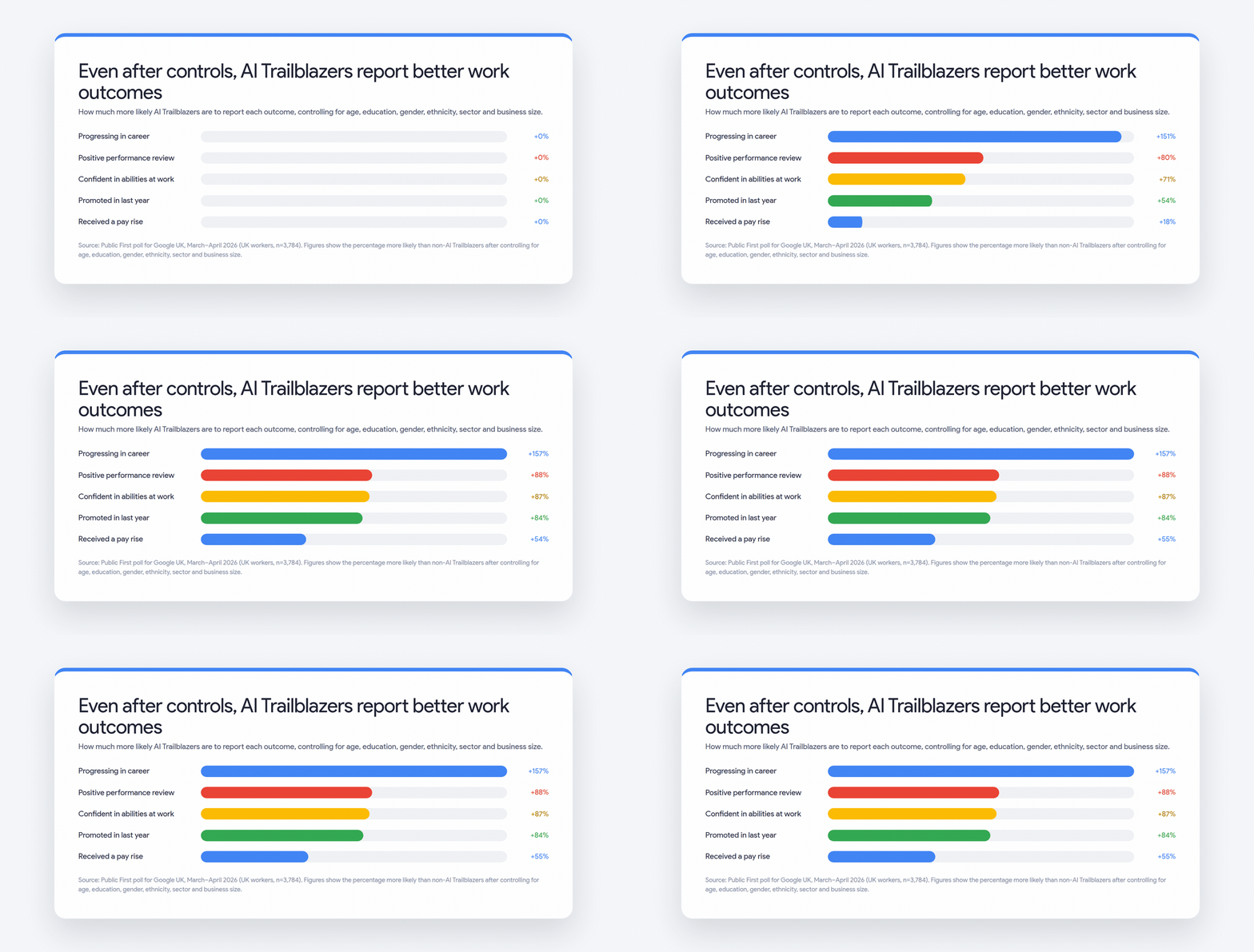
Trailblazers save nearly 8 hours per week across personal and professional life — effectively gaining an extra day. Even after controlling for age, sector, gender, ethnicity, education, and business size, deeper AI use correlates with greater career momentum. Trailblazers are 84% more likely to have been promoted in the past year, 88% more likely to get a positive performance review, and 55% more likely to secure a pay rise.
However, this deeper adoption is unevenly spread across age groups, genders, and regions. The longer we wait to act, the more the gap will widen. The good news: these disparities are fixable, and reaching Trailblazer level doesn't require coding skills.
Overcoming the barriers
The real challenge is turning experimentation into AI literacy that unlocks career growth and national economic gains. The barriers are largely behavioral, cognitive, or organisational:
- Behavioral — The 'One-and-Done' habit: Casual users don't iterate prompts, match tools to tasks, or explore multi-modal or agentic workflows.
- Cognitive — The 'Search Box' mindset: Many treat AI like a search engine instead of a creative partner. Only 37% have asked AI to help write a better prompt.
- Organisational — The 'Permission to Prompt' gap: Workers wait for explicit guidance. Only one-third of AI users have clear professional policies, and fewer than half know who to ask about responsible use.
"The barriers holding people back are surprisingly easy to overcome with collective focus," says a Google UK spokesperson. "Reaching advanced AI use doesn't require deep technical knowledge — anyone can become a Trailblazer."
Building a nation of AI Trailblazers
To help close the gap, Public First has launched an AI skills quiz that lets workers benchmark their abilities, identify their user type, and get actionable tips for career growth. Google's nationwide upskilling initiative, AI Works for Britain, builds on the Digital Garage programme, which has trained over 1.2 million people in the past decade. It supports the Government's goal of training 10 million workers in AI skills by 2030.
Google's tools already support £140 billion in economic activity across the UK — equivalent to Greater Manchester's economy. Over 40% (£60bn) comes from empowering British SMBs. Products like Search, Android, Cloud, and YouTube save British workers 51 million hours weekly, roughly the output of the entire NHS workforce.


By focusing on behavioural change, cognitive shifts, and organisational support, the UK can close the AI adoption gap and unlock widespread productivity gains. The path forward is clear: equip every worker with the skills to become an AI Trailblazer.