For years, Windows tablets promised a future that never quite arrived. Microsoft is still chasing that vision with the new Surface Pro, often called the Surface Pro 12 or Surface Pro 2025. This compact tablet runs on a Snapdragon X Plus chip and is built for casual browsing and office work. It’s not high-end, but it delivers a solid, fanless experience Windows tablets have long struggled to provide. And with Qualcomm’s Hexagon NPU, it’s got impressively snappy AI, too.
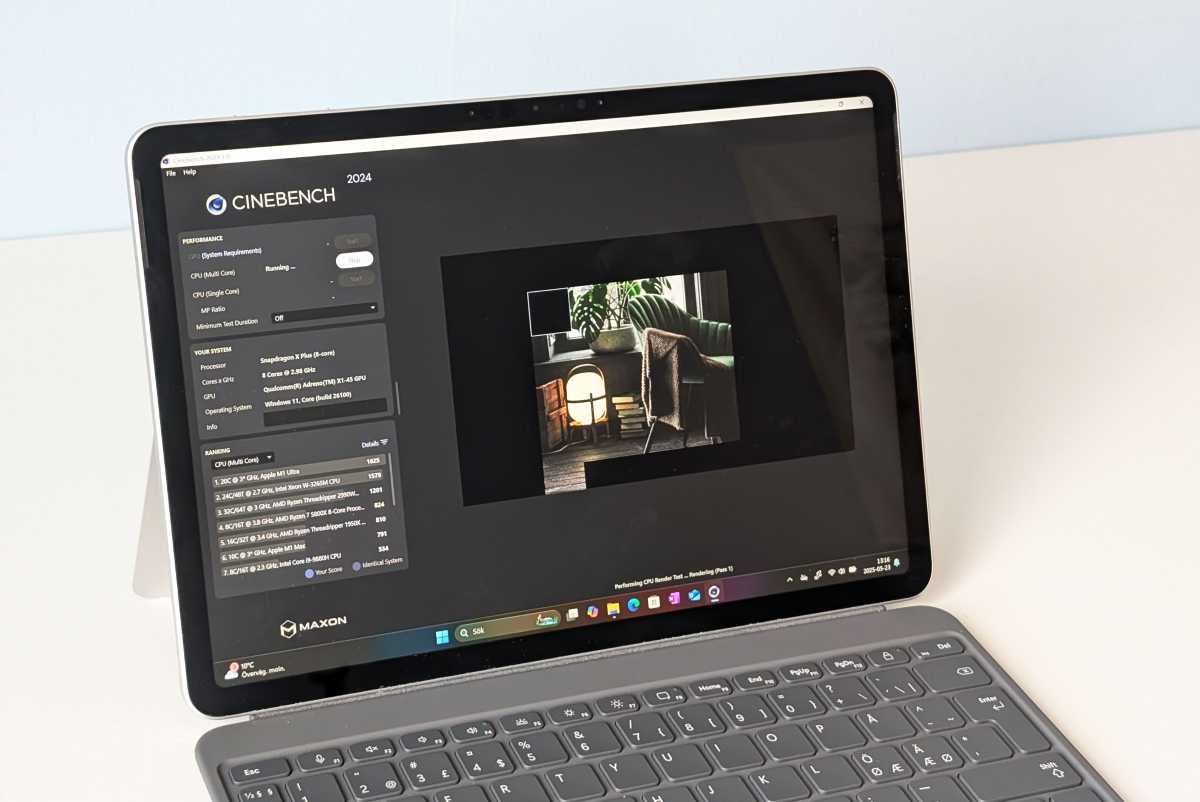
Quiet and comfortably cool
The Surface Pro is completely silent, with no fan noise, and it never gets annoyingly hot to hold. It gets a little disturbingly lukewarm, but nothing unpleasant. Graphics performance throttles during extended 3D workloads, but honestly, who buys a Surface to play games?
The base model costs $799 with 256GB of SSD storage, or $899 for 512GB. Both come with 16GB of RAM, enough for regular office work, media streaming, basic photo editing, and communication. Multitasking goes smoothly: I ran a Teams video meeting, browsed the web, worked on Word documents, and synced a large video file simultaneously without any interference.
Wi-Fi 7 and Wi-Fi 6 connections are stable and fast. There’s no 5G or LTE option; for that, you have to step up to a larger, pricier model.
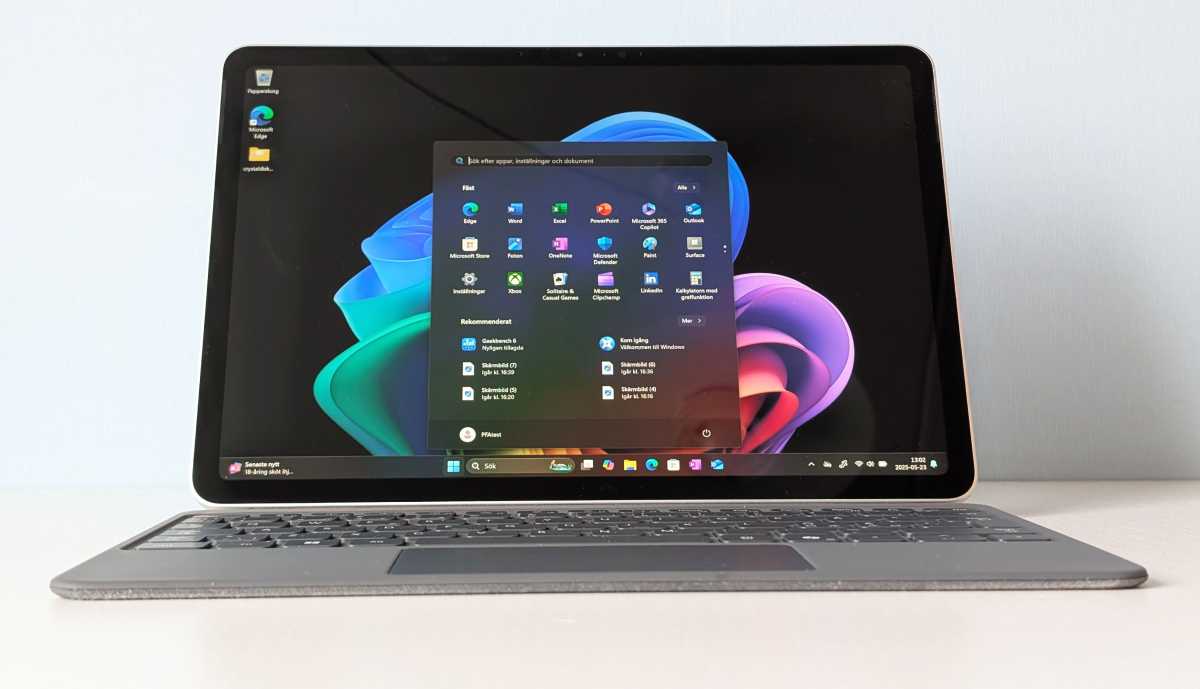
Sharp display, but limited space
The 12-inch screen is the main obstacle to productive multitasking. Even at high resolution, having many windows and tabs active quickly becomes cluttered. You’ll need to adopt a tablet mentality: keep one or two apps visible and hide the rest.
The IPS panel offers semi-high brightness (2196×1464 pixels) and a 60 or 90 Hz refresh rate, but you have to set it manually—dynamic frequency isn’t supported. Color gamut barely exceeds sRGB, but pre-calibration ensures high accuracy within that range. Black levels, contrast, and viewing angles are good, making movies enjoyable even without HDR support. The speakers deliver detailed, rich sound for music, speech, and films, as long as you don’t crank the volume to maximum.
The 1080p webcam produces acceptable images with even, neutral colors, but pale contrast and slightly blurred details hold it back. Good microphones and AI noise filters make it fine for video meetings, though the image could have more punch.
The rear 10-megapixel camera takes decent daylight photos, but its jumpy autofocus can cause problems for video and AR applications.
Compact design with minimal drawbacks
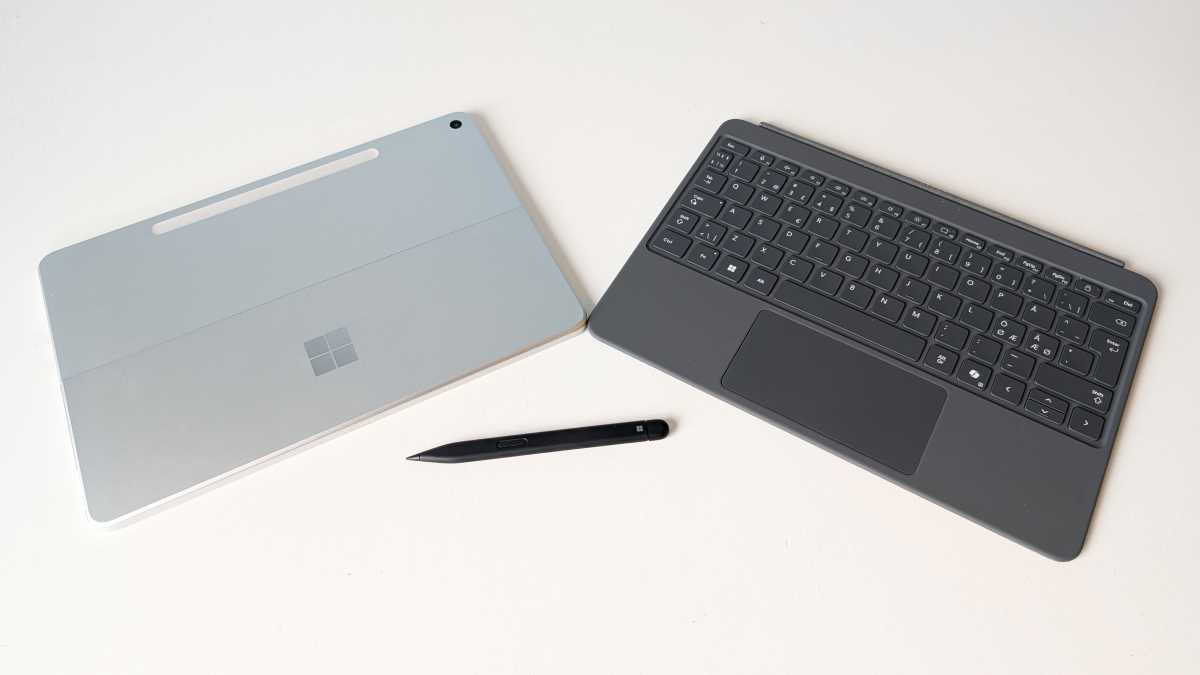
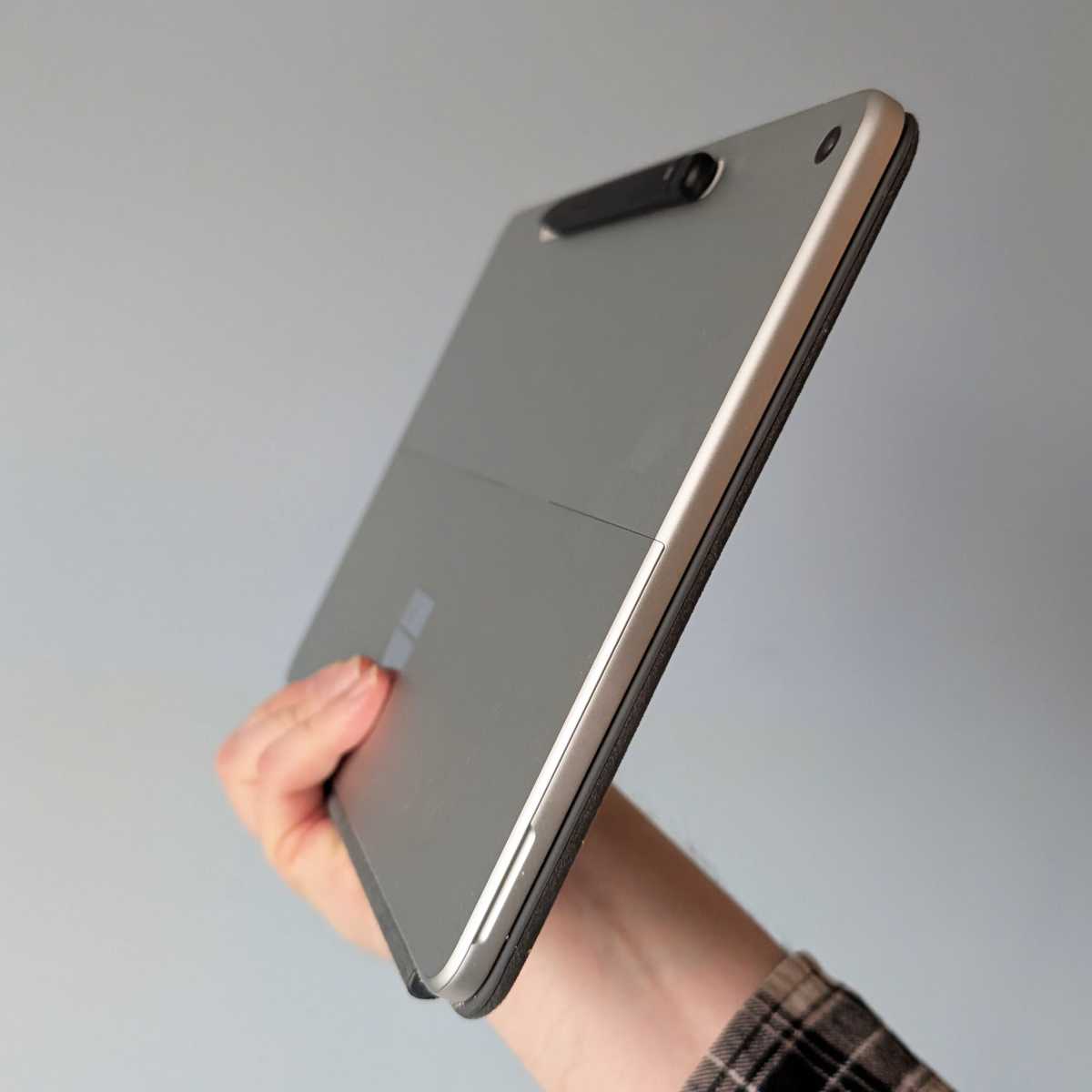
With a 12-inch screen and 3:2 aspect ratio, the tablet is noticeably compact and short in width. Rounded corners and edges make it grip-friendly, and the matte aluminum back (100% recycled) feels premium. The foldable back support is sturdy, making it practical as a small digital photo frame or film screen.
But it’s still a Windows computer, so you’ll need a keyboard and mouse—and a pen for full touchscreen use. The Slim Pen costs $249.99 bundled with the keyboard. It snaps onto the back magnetically and charges there. Everything works immediately without manual pairing or calibration, and precision is excellent. The keyboard feels spacious despite its compact size.
Two USB ports, nothing more
Connectivity is minimal: two USB-C 3.2 Gen 2 ports with DisplayPort support. You can attach a USB-C dock for more ports and external displays. No charger is included.
Battery life ranges from 3 to 10 hours of active use with max screen brightness, and up to 21 hours with frugal use. Heavy AI workloads or 3D rendering drain it faster; light web browsing, email, and Excel push it toward the upper end. For most people, it’s as capable as any small ultralight laptop—maybe not quite as fast, but definitely fast enough.
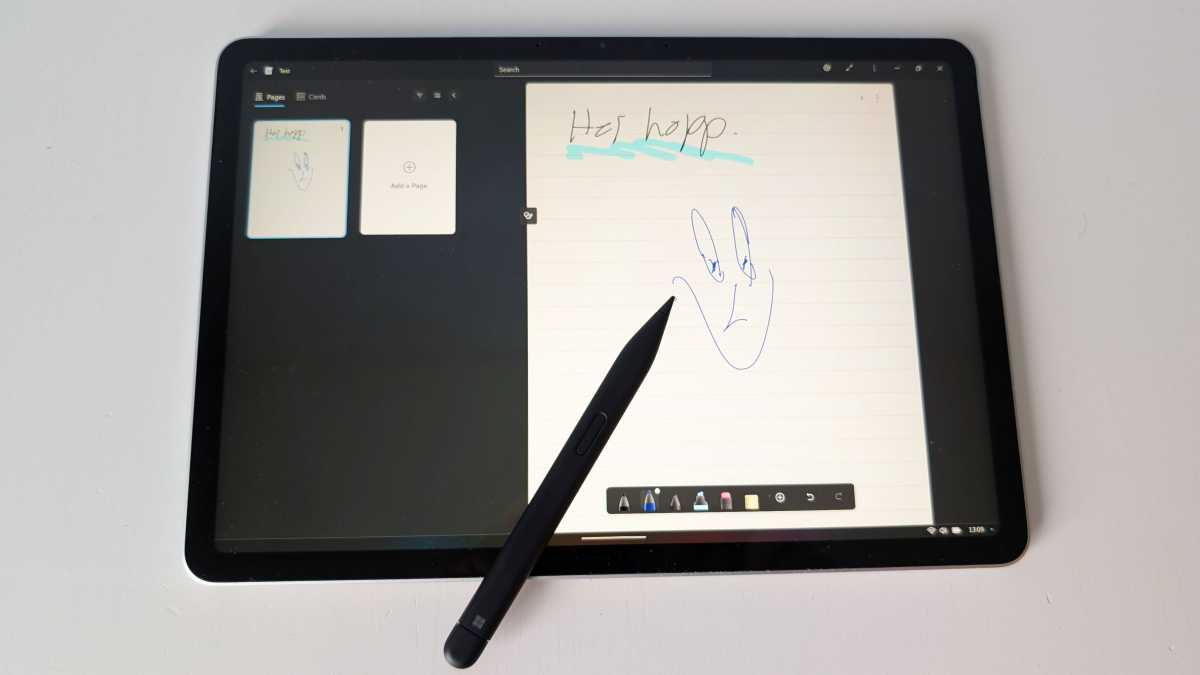
With the right accessories, the Surface Pro becomes a compact, competent laptop that also works as a touchscreen tablet with pen support. It’s perfect for streaming movies on the couch. Is it enough to revive the Windows tablet concept? Maybe. Maybe not. But for fans of the form factor, it’s a great device.
Specifications
Product name: Surface Pro 2025
Tested: May 2025
Manufacturer: Microsoft
Processor: Qualcomm Snapdragon X Plus, 8 Oryon 3.4 GHz
NPU: Hexagon, 45 TOPS
Memory: 16 GB LPDDR5X
Storage: 256 GB / 512 GB SSD
Display: 12-inch glossy IPS, 2196×1464 pixels, 90 Hz, ~400 cd/m²
Webcam: 10 MP rear, 1080p IR front
Connections: 2× USB-C 3.2 Gen 2 with DisplayPort, keyboard docking
Wireless: Wi-Fi 7, Bluetooth 5.4
OS: Windows 11 Home
Other: Optional keyboard, pen, and charger
Noise: Fanless